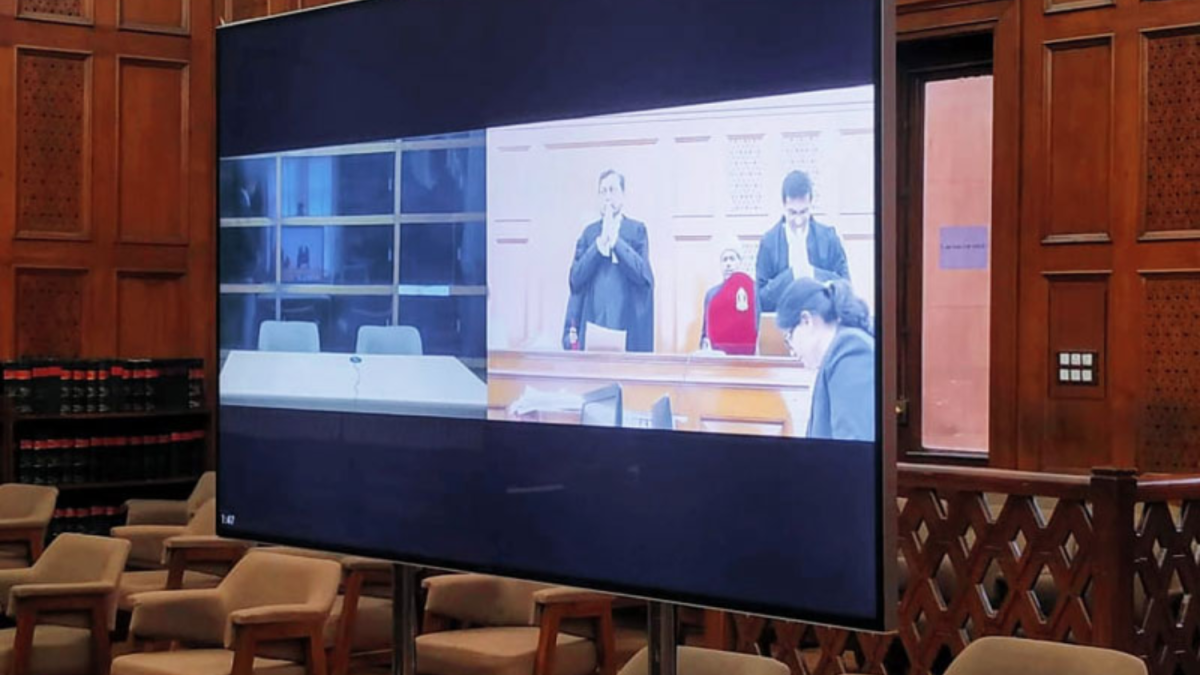
The Punjab and Haryana High Court has directed that a witness be examined through Video Conferencing (VC), holding that the rules governing video conferencing must be meaningfully applied and not used as technical obstacles to the examination of witnesses who may be geographically distant or unable to travel.
Video Conferencing in Indian Courts: Background
The use of technology in Indian courts has expanded significantly in recent years, with Video Conferencing being one of the most important innovations. The Supreme Court first addressed VC in State of Maharashtra v. Praful B. Desai (2003), holding that examination of witnesses via Video Conferencing is permissible and constitutes a valid examination within the meaning of the Code of Criminal Procedure.
During the COVID-19 pandemic, courts across India rapidly adopted VC technology for conducting hearings. The Supreme Court issued Video Conferencing Rules to provide a framework for such proceedings, and many High Courts followed with their own rules. The pandemic experience accelerated the mainstreaming of technology in judicial proceedings.
Punjab and Haryana High Court’s Order
The High Court directed that the witness in question be allowed to depose through Video Conferencing, emphasising that the rules must be applied in a manner that facilitates the examination of witnesses rather than creating unnecessary procedural hurdles. The Court observed that rules governing technology-assisted proceedings must be construed to advance the purpose of enabling testimony rather than to frustrate it.
This is particularly important in cases where witnesses are located in distant places or have genuine difficulty in physically appearing before the court, and where VC facilities are readily available to both the court and the witness.
Practical Impact
The wider adoption of VC for witness examination can significantly improve access to justice by reducing the burden on witnesses who would otherwise have to travel long distances to court. It can also speed up trials by making it easier to schedule and conduct witness examinations.
Ongoing Development
India’s e-Courts project, under the direction of the Supreme Court’s e-Committee, is working to further integrate technology into the judicial process. Video conferencing facilities are being established across courts at various levels, and the rules and procedures governing their use are continuing to evolve.
Court: Punjab and Haryana High Court | Source: LiveLaw | June 2026